Showing posts with label SickKids Palliative Care. Show all posts
Showing posts with label SickKids Palliative Care. Show all posts
TRAC-PG website launches
Two years in the works, TRACPG.ca was launched today with a content management software to allow the Team for Research with Adolescents and Children in Palliation and Grief to build content for TRAC-PG itself along with children, families, clinicians, volunteers, researchers, policy makers and advocates. Resources include Events Calendar, News Updates, Links, Key Reports & Documents, Education & Workshops, Literature Reviews and a Literature Database. Additional pieces will be phased in for email signup to HTML e-newsletter (replacing PDF attachments), Photo Gallery and member login with Comment. The team can add rotating photos on a per section basis, create text banners on 'sticky notes' on each section, tag or label stories for a tag cloud navigation and expand a Google map of the TRAC-PG network in Canada. Discussions in the fall of 2006 initially we also hoped to include a private login where staff, children in palliation and families in grief could communicate privately. After Sickkids IT department confirmed that Sickkids would be joining Carepages shortly and that a whole new website content system was in the works, we removed the patient-family-staff communication. By the fall of 2007, the work of architecting and designing the website began in earnest with the aim of an end of summer launch. And here it is, a little trimmer and a little later than the best laid plans but ready to help and celebrate palliative children and their families and remember (via one of the big home page images) Dr. Beverley Antle who was a strong force for Canadian family-centred research until her death in 2006 in the prime of her life due to a car accident, just a few months after Sasha died. Several big thank you's are in order: to the extremely talented and dedicated Gabriela Abrudan for designing and programming this elegant and highly functional site and for her patience with a very long project of the heart; to Laura Beaune who coordinates TRAC-PG research from Sickkids Palliative and Bereavement Care Service for somehow finding time to do all the visioning, discussion, feedback and status calls in the ONE very busy day a week she has at Sickkids - Laura's involvement in the site while dedicated to research supporting children and their families makes me confident the webite will have a positive impact; to Jodi Hamelin and Ashley Teschner for helping us finalize functionality and do most of the content population as part of their work with Palliative at Sickkids; and to my brother Kevin Blumberg for covering my time away from our joint work responsibilities.


Dr Chris Feudtner at Sickkids on "Partnering Leadership in the Care of Children with Complex Chronic Conditions"
Dr Chris Feudtner works with the Paediatric Advanced Care Team (PACT) at The Children's Hospital of Philadelphia, tagline "Hope lives here." He began, in reference to Ian Brown's presentation on Walker and their family experience, "I profoundly affirm what we just heard...If you let the universe change you, you can go places you would never expect."
Here is my highlight reel of a wide ranging look at professional-patient-family communication, followed by further examples.
Reflecting on the title of his talk calling for "partnering leadership", Feudtner joked that he could imagine eyes rolling when he mentioned 'leadership' as in "Oh my god, not leadership." He confirmed his belief in trials, statistics and evidence based research, particularly from the realm of palliative care, but emphasized the need for professionals and staff to get on the same page. This could start with a simple question like "Do we try plans that are off the care plan?" or "Ask, what are you hoping for with this admission?".
From his work in palliative care, "We talk in the language of hope" and it is important to ask about hopes; the answer may be as simple as 'I hope for a little more rest'. Studies show that patients want ready access to medical professionals and emotional expression: "It's about relationship and information exchange, not a miracle."
"One of the best ways to live a long time is to get a palliative care consult. And I am not entirely joking; it can help with iatrogenic issues [adverse treatment effects]..."
"Doctors and parents hopes are not on the same page" nor are their views on quality of life. "We find out that doctors and parents don't hope for the same things. This is very remediable." "Doctors are paid to be competent but parents are emotional" so professionals can constantly reconsider how they relate to a patient and ask how they can do it better. "Parents are uncertain and may feel unsupported but they feel their values are clear and if they make a choice they feel empowered.... Parents rank concerns as beyond organs..." Its important to deal with the great uncertainty. "We often don't know baseline status, so I ask parents to bring in pictures so they can see the child when they are not comatose. We don't know the baseline of recovery or how long before the next episode." In such circumstances, he thinks asking parents to graph where they see quality of life makes no sense. "These kids are like playing in traffic... It really helps if we doctors can say 'I wish I knew but I don't'". He imagined the audience thinking "You just lost a lot of street cred" and suggested "I gave up being a hero. Be close to the bone. Parents don't look less at you."
Feudtner called for professionals to couch diagnosis with concerns rather than probabilities and to question proceedures. "What is the purpose of the MRI? Coordination is also about saying no sometimes. We don't need to... What is important is not only what you hear at rounds but what you hear from families." Describing the problem solving as "not linear" and "like solving mazes from within" where the best strategy is sometimes thought to be 'always go in the same direction' until you get stuck in a blind loop, Feudtner highlighted: "We need shared decision making and partnering leadership." While a fan of Evidence Based Medicine, EBM is not his only guide: staff need to clarify, interpret (and anticipate), prioritize and bolster patients, starting with an invitation: "Ask, how can I be helpful?" To Feudtner this question is "more than a courtesy, it's a commitment".
Feudtner's three commitments to patients are: "I will be straightforward. If I am worried I will let you know. And I will not make a promise I cannot keep." He emphasized that patient and family emotions change. "Our families are terribly charged with negative affect. They have good reason to be sad. But they also have a great deal of positive affect. They are jazzed about their child. They have strong positive and negative affect. They don't want a polyana-ish reponse, just respect... Why trust parents to make decisions for kids. Because they have these strong ties and polyvalent feelings."
Feudtner noted that in partnering leadership, a key element "is neither abdicating nor appropriating" hope. When discussing hopes, you can simply ask "What are you looking for?" and be more comfortable with a discussion along the lines of, "'I wish it was possible that the cancer goes away'. 'What else are you wishing for?' 'I want to go home to spend time with family.' 'I can help with that'." There is no need to extinguish hope or be negative about alternative therapies and keep in mind there "are a variety of hopes."
Here is my highlight reel of a wide ranging look at professional-patient-family communication, followed by further examples.
"I believe in family centred care but we need to have the family and the staff pull together in a kind of partnership. ...What is desperately needed among this community is a sense of where we are going to go... When the train goes off the rails it is because of decision making problems at the top. We need strategy more than tactics. There always will be uncertainty. It's essential to think about what we are aiming for with risks. ... Once mindful, it is easy to see we are working on our own problems, we never go upstream to ask if we are on the same page. ... Parents are paying attention to how well we do this. ... What about emotional management strategies. We are constantly managing it and often mangling it. ... Stories are how we make meaning. I see palliative are nodding. Shared meanings and shared purposefullness. ... We need shared decision making and partnering leadership.... We need to shift from delivering difficult news to having a learning conversation....The most common proceedure we do at the hospital is talk to families."
Reflecting on the title of his talk calling for "partnering leadership", Feudtner joked that he could imagine eyes rolling when he mentioned 'leadership' as in "Oh my god, not leadership." He confirmed his belief in trials, statistics and evidence based research, particularly from the realm of palliative care, but emphasized the need for professionals and staff to get on the same page. This could start with a simple question like "Do we try plans that are off the care plan?" or "Ask, what are you hoping for with this admission?".
From his work in palliative care, "We talk in the language of hope" and it is important to ask about hopes; the answer may be as simple as 'I hope for a little more rest'. Studies show that patients want ready access to medical professionals and emotional expression: "It's about relationship and information exchange, not a miracle."
"One of the best ways to live a long time is to get a palliative care consult. And I am not entirely joking; it can help with iatrogenic issues [adverse treatment effects]..."
"Doctors and parents hopes are not on the same page" nor are their views on quality of life. "We find out that doctors and parents don't hope for the same things. This is very remediable." "Doctors are paid to be competent but parents are emotional" so professionals can constantly reconsider how they relate to a patient and ask how they can do it better. "Parents are uncertain and may feel unsupported but they feel their values are clear and if they make a choice they feel empowered.... Parents rank concerns as beyond organs..." Its important to deal with the great uncertainty. "We often don't know baseline status, so I ask parents to bring in pictures so they can see the child when they are not comatose. We don't know the baseline of recovery or how long before the next episode." In such circumstances, he thinks asking parents to graph where they see quality of life makes no sense. "These kids are like playing in traffic... It really helps if we doctors can say 'I wish I knew but I don't'". He imagined the audience thinking "You just lost a lot of street cred" and suggested "I gave up being a hero. Be close to the bone. Parents don't look less at you."
Feudtner called for professionals to couch diagnosis with concerns rather than probabilities and to question proceedures. "What is the purpose of the MRI? Coordination is also about saying no sometimes. We don't need to... What is important is not only what you hear at rounds but what you hear from families." Describing the problem solving as "not linear" and "like solving mazes from within" where the best strategy is sometimes thought to be 'always go in the same direction' until you get stuck in a blind loop, Feudtner highlighted: "We need shared decision making and partnering leadership." While a fan of Evidence Based Medicine, EBM is not his only guide: staff need to clarify, interpret (and anticipate), prioritize and bolster patients, starting with an invitation: "Ask, how can I be helpful?" To Feudtner this question is "more than a courtesy, it's a commitment".
Feudtner's three commitments to patients are: "I will be straightforward. If I am worried I will let you know. And I will not make a promise I cannot keep." He emphasized that patient and family emotions change. "Our families are terribly charged with negative affect. They have good reason to be sad. But they also have a great deal of positive affect. They are jazzed about their child. They have strong positive and negative affect. They don't want a polyana-ish reponse, just respect... Why trust parents to make decisions for kids. Because they have these strong ties and polyvalent feelings."
Feudtner noted that in partnering leadership, a key element "is neither abdicating nor appropriating" hope. When discussing hopes, you can simply ask "What are you looking for?" and be more comfortable with a discussion along the lines of, "'I wish it was possible that the cancer goes away'. 'What else are you wishing for?' 'I want to go home to spend time with family.' 'I can help with that'." There is no need to extinguish hope or be negative about alternative therapies and keep in mind there "are a variety of hopes."
The Sasha Sanction for fragile, multi-organ impacted Alagille children
1. In the early workup of the Alagille care plan to accomodate liver and heart defects, where transplant is not supported and heart defect is serious, the family meeting should include cardiologist, liver specialist and palliative care to establish parental consent for a surgical plan.
2. Before each surgery, this family -staff group reviews the history of adverse events during catheterizations, prior surgery and any other proceedures to consider the degree of cardiac intervention and surgical stress the child can tolerate.
3. The Sasha Sanction gives parents momentary permission to reconsider their own and the institutions impulse to surgery; it serves as the flight safety movie where you learn of the exits in case of crash; it puts up the flag, at this precise moment, that surgery can lead to life, death and lingering death.
4. The Sasha Sanction recognizes as particularly fragile and honors Alagille children with the serious heart defect pulmonary atresia and liver defect of unknown magnitude.
Background
Since parents are uniquely vulnerable to hope for continued life of a child that will otherwise die, it is not sufficient that a cardiologist secure a cardiac surgeon's agreement to undertake surgery. Parental consent to and authorization of surgery is best achieved after reviewing: risk and benefit to both organs, extent and duration of surgery, health of liver and all adverse events such as internal bleeding and surgical reentry, bleeding at the site of a catheterization, blood pressure drop during exturbation and any single incident of haematemesis (vomiting blood) suggestive of varices or portal hypertension. The final review of adverse events improves patient safety and empowers parents. Small incidents can suggest patterns in combination. The very process of acknowledging adverse events in complex and lengthy care removes the veil that undergirds the power imbalance between parent and staff and expands parents capacity and partnership with staff over feelings of diminished capacity, vigilance and distrust when incidents are not debriefed or, even worse, not acknowledged as important.
Interprofessionalism essential for family centred care
We like to think Sasha's cardiologist 'got us'. She carefully explained options and risks, considered our questions and viewpoints and even offered us a forgiving ear for our needed attempts at humor. Nonetheless, it is mission impossible to ask one physician to navigate this storm alone, each time, without adding occurrences of deep parent regret and doubt about one of the most devastating losses they will ever experience. In the quiet of the clinic we made our decisions, and later I wondered if we had asked enough questions. It is now so clear that these questions should be raised by the institution with a unique amount of experience, not parents for whom this is a unique event, and the institutional vehicle at Sickkids for consideration of the most complex decisions is the interprofessional family meeting. Hearing the separate voices of other disciplines values these disciplines and may encourage deeper consideration at a time when fatigue and grief can impair decision making. The simple absence of other services can create the impression that there is no issue to consider or even that one service is less confident in the capacity, speed or focus of another service. In Sasha's memory, I asked her primary physician to introduce palliative care in similar cases at the outset or before surgery and in her practice I understand she has made this happen, allowing parents, in her words, to consider when palliative care may be "a good option, not just the last option".
Good death
The palliative service offers supports when a child is expected to die within six months and is a consult service. Any parent can request a palliative consult however they may also feel that this would be 'giving up'. Only more routine, earlier introduction of palliative care can assuage that guilt. However there are very few areas of the hospital that refer palliative care in the absence of parent request due to severity of conditions. Palliative service staff can explain to parents that modern medicine views the relationship between recovery and dying as a wiggly line of ups and downs and not a straight diagonal where more palliation equals less life. Children can live, die suddenly, serially crash and be resuscitated or, most distressingly, suffer complications resulting in a lingering death. Staff can explain that parent hopes and dreams of recovery could lead to consideration of interventions that may keep the child alive in greatly diminished capacity. Staff can confirm that families understand they can bring their child home to the place they most love, that it can be done well and that it can give the child and family a very special final time together. Staff can share that Sasha rebounded in spirit immediately upon her return, decided to live another 5 weeks and that her parents wished they had brought Sasha home earlier.
Dedication
The Sasha Sanction is dedicated to Sasha's primary physician who was available at every step of Sasha's care and who redoubled her efforts, tirelessly rounding up multiple services, when Sasha got sicker. Sasha and her family were privileged to have a cardiologist as competent, empathetic and well positioned to effect action.
2. Before each surgery, this family -staff group reviews the history of adverse events during catheterizations, prior surgery and any other proceedures to consider the degree of cardiac intervention and surgical stress the child can tolerate.
3. The Sasha Sanction gives parents momentary permission to reconsider their own and the institutions impulse to surgery; it serves as the flight safety movie where you learn of the exits in case of crash; it puts up the flag, at this precise moment, that surgery can lead to life, death and lingering death.
4. The Sasha Sanction recognizes as particularly fragile and honors Alagille children with the serious heart defect pulmonary atresia and liver defect of unknown magnitude.
Background
Since parents are uniquely vulnerable to hope for continued life of a child that will otherwise die, it is not sufficient that a cardiologist secure a cardiac surgeon's agreement to undertake surgery. Parental consent to and authorization of surgery is best achieved after reviewing: risk and benefit to both organs, extent and duration of surgery, health of liver and all adverse events such as internal bleeding and surgical reentry, bleeding at the site of a catheterization, blood pressure drop during exturbation and any single incident of haematemesis (vomiting blood) suggestive of varices or portal hypertension. The final review of adverse events improves patient safety and empowers parents. Small incidents can suggest patterns in combination. The very process of acknowledging adverse events in complex and lengthy care removes the veil that undergirds the power imbalance between parent and staff and expands parents capacity and partnership with staff over feelings of diminished capacity, vigilance and distrust when incidents are not debriefed or, even worse, not acknowledged as important.
Interprofessionalism essential for family centred care
We like to think Sasha's cardiologist 'got us'. She carefully explained options and risks, considered our questions and viewpoints and even offered us a forgiving ear for our needed attempts at humor. Nonetheless, it is mission impossible to ask one physician to navigate this storm alone, each time, without adding occurrences of deep parent regret and doubt about one of the most devastating losses they will ever experience. In the quiet of the clinic we made our decisions, and later I wondered if we had asked enough questions. It is now so clear that these questions should be raised by the institution with a unique amount of experience, not parents for whom this is a unique event, and the institutional vehicle at Sickkids for consideration of the most complex decisions is the interprofessional family meeting. Hearing the separate voices of other disciplines values these disciplines and may encourage deeper consideration at a time when fatigue and grief can impair decision making. The simple absence of other services can create the impression that there is no issue to consider or even that one service is less confident in the capacity, speed or focus of another service. In Sasha's memory, I asked her primary physician to introduce palliative care in similar cases at the outset or before surgery and in her practice I understand she has made this happen, allowing parents, in her words, to consider when palliative care may be "a good option, not just the last option".
Good death
The palliative service offers supports when a child is expected to die within six months and is a consult service. Any parent can request a palliative consult however they may also feel that this would be 'giving up'. Only more routine, earlier introduction of palliative care can assuage that guilt. However there are very few areas of the hospital that refer palliative care in the absence of parent request due to severity of conditions. Palliative service staff can explain to parents that modern medicine views the relationship between recovery and dying as a wiggly line of ups and downs and not a straight diagonal where more palliation equals less life. Children can live, die suddenly, serially crash and be resuscitated or, most distressingly, suffer complications resulting in a lingering death. Staff can explain that parent hopes and dreams of recovery could lead to consideration of interventions that may keep the child alive in greatly diminished capacity. Staff can confirm that families understand they can bring their child home to the place they most love, that it can be done well and that it can give the child and family a very special final time together. Staff can share that Sasha rebounded in spirit immediately upon her return, decided to live another 5 weeks and that her parents wished they had brought Sasha home earlier.
Dedication
The Sasha Sanction is dedicated to Sasha's primary physician who was available at every step of Sasha's care and who redoubled her efforts, tirelessly rounding up multiple services, when Sasha got sicker. Sasha and her family were privileged to have a cardiologist as competent, empathetic and well positioned to effect action.
A snapshot of the fundraising needs for paediatric palliative care at one Toronto centre of excellence
The Sasha Bella Fund for Family-Centred Care focuses our efforts on raising funds for SickKids Hospital for family-centred, interprofessional and palliative initiatives to help SickKids nurses, doctors and allied professionals continue to evolve advanced models for family communication. We think this is the best way for us to direct Sasha's experience to support other kids and care teams. We offer a parallel track to the highly successful large scale fund raising for expensive new equipment and research. While our focus is supporting critical 'soft' processes within SickKids Hospital we will forever be grateful for the sensitivity and expertise at The Temmy Latner Centre who, working with SickKids Hospital, organized a multi-disciplinary care team for Sasha in the community so that we could bring her home. Here are figures provided as of September 2007 by Temmy Latner Centre sharing the scope of the fundraising needs. All figures relate to The Max and Beatrice Wolfe Centre for Children’s Grief and Palliative Care.
Number of grief and paediatric palliative care referrals since May 2006: 136
Number of grieving or terminally ill children and their siblings supported since May 2006: 263
Number of community presentations since May 2006: 140
Number of classmates of grieving or terminally ill children seen so far this school year: 350
Number of people who did this work: 6
Number of new dollars needed to hire a counsellor skilled in children’s grief and palliative care: $80,000
Number of new dollars needed to develop and distribute education material: $10,000
Number of new dollars needed to buy equipment for teens to film their stories, for and about their families: $5,000
Number of new dollars needed to buy a years worth of journals and activity books for kids and teens: $2,000
Number of new dollars needed to fund a week long multi-media arts camp for kids and teens in The Unicorn Room: $3,000
The chance to make all of this available to the next child who needs us:
PRICELESS
Number of grief and paediatric palliative care referrals since May 2006: 136
Number of grieving or terminally ill children and their siblings supported since May 2006: 263
Number of community presentations since May 2006: 140
Number of classmates of grieving or terminally ill children seen so far this school year: 350
Number of people who did this work: 6
Number of new dollars needed to hire a counsellor skilled in children’s grief and palliative care: $80,000
Number of new dollars needed to develop and distribute education material: $10,000
Number of new dollars needed to buy equipment for teens to film their stories, for and about their families: $5,000
Number of new dollars needed to buy a years worth of journals and activity books for kids and teens: $2,000
Number of new dollars needed to fund a week long multi-media arts camp for kids and teens in The Unicorn Room: $3,000
The chance to make all of this available to the next child who needs us:
PRICELESS
Pediatric Patients Receiving Palliative Care in Canada
A multicenter review of 8 dedicated pediatric palliative care programs in Canada, published in Archives of Pediatric and Adolescent Medicine in June 2007, estimates that nationally "between 5% and 12% of the children who could benefit from palliative care received services" and concludes that "Pediatric palliative care programs in Canada care for a diverse population of patients with a wide range of age and disease conditions. Only a small percentage of children who die, however, receive services from these dedicated programs." The review is based on 317 children cared for during 2002 and 2003. Over the last three years, hard work and determined communication have raised these numbers, there are now 4.5 palliative care professionals at SickKids Hospital and referrals are up. We are however still far from normalizing palliative care access to families early in the care of kids with long term or severe health challenges. Thanks to Maria Rugg at SickKids Hospital, one of the study's co-authors, for pointing us to this report.
Yahrzeit candles and conversations
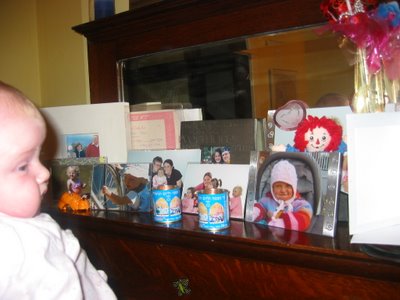
Traditionally Jews light candles a year after a death but we lit a candle for Sasha along with Bruce last sunday on the night of Yom Kippur. It was hard to first celebrate the new year and then a week later contemplate and atone for sins against other people and against the spiritual. Though I am an athiest Jew (strange as that sounds), seeing the two candles beside Sasha's pictures and then on the kitchen table was a gut kick when I had one of those discombobulated moments of disbelief about an event that recently happened and of which there can be no doubt. A moment when the eyes glaze over and the reflection is non rational, just a wave of emotion.
In June I was exhausted, sad and almost relieved for Sasha. During the funeral and meeting of people for the shiva week I felt a little disassociated. There wasn't time to grieve before Mia arrived. There were many times of intense sadness and awareness, such as at her funeral, but the finality for me of Sasha's death seemed to flare more with the flickering candle burning through the night and through the entire following day and into the part of the next night.


We have finally had a chance to meet with some of Sasha's care givers to whom we turned for advice about Sasha's fund.
In September I met with the paliative care nurses and doctors who helped bring Sasha home and was appreciative of their support of my interest in creating a place to remember the HSC kids who have died and any help we can offer in expanding parents choices as they evaluate surgical options. I was very happy to hear of plans for a palliative care library and website portal where knowledge about choices and resources in the hospital or out at the home can be further explored.
Then we visited Sasha's cardiologist, Dr. Jennifer Russell, as a family with Mia. First we stopped by 4D to show off Mia and enjoy a few moments with the wonderful nurses and OTs.
The meeting with Dr Russell was long awaited. We were lucky that by complete chance Sasha was paired with a doctor who can turn from a lazer like dedication to cardiac research and care to an open and empathetic review of any process or decision throughout Sasha's life or experience at Sick Kids and that she has ample capacity for our awkward jokes. She gave us direction and suggestions for further thought about the projects we wish to work on.
The visit was immensely gratifying. And then, as always, followed by intense sadness. Sasha was sicker than we knew as she struggled to grow and develop and handle her medical supports and interventions and then fight back after post surgical bleeding and liver failure. Our little girl experienced a lot and her care was more challenging than expected. So we have a growing list of ideas and little projects that we wish to know think over and fund raise for. More on that later.
The next day we got a supportive email from the OT who helped Sasha walk. "When I think back to how much she accomplished in terms of motor milestones, not to mention her lovely spirit and social skills, I realize now how truly amazing her achievements were. Knowing now, how "invisibly" sick she must have been, her accomplishments were utterly remarkable! I will always feel blessed for having known Sasha."
Pam was asked at our local children's store on St Clair, Playful Minds, how she was doing and if she minded talking about Sasha. What a great question! We love to talk about Sasha. Sure it is sad sometimes and perhaps some parents dont want to talk about a deceased child, so it is good to ask. We do. For those who know us, we are very happy that you remember with us, when you wish to.
For all the dedicated OTs and PTs, here is Sasha's crab crawl, her wanting to always do a couple things at once, and her fiesty determination to go where she wanted:
In June I was exhausted, sad and almost relieved for Sasha. During the funeral and meeting of people for the shiva week I felt a little disassociated. There wasn't time to grieve before Mia arrived. There were many times of intense sadness and awareness, such as at her funeral, but the finality for me of Sasha's death seemed to flare more with the flickering candle burning through the night and through the entire following day and into the part of the next night.



We have finally had a chance to meet with some of Sasha's care givers to whom we turned for advice about Sasha's fund.
In September I met with the paliative care nurses and doctors who helped bring Sasha home and was appreciative of their support of my interest in creating a place to remember the HSC kids who have died and any help we can offer in expanding parents choices as they evaluate surgical options. I was very happy to hear of plans for a palliative care library and website portal where knowledge about choices and resources in the hospital or out at the home can be further explored.
Then we visited Sasha's cardiologist, Dr. Jennifer Russell, as a family with Mia. First we stopped by 4D to show off Mia and enjoy a few moments with the wonderful nurses and OTs.
The meeting with Dr Russell was long awaited. We were lucky that by complete chance Sasha was paired with a doctor who can turn from a lazer like dedication to cardiac research and care to an open and empathetic review of any process or decision throughout Sasha's life or experience at Sick Kids and that she has ample capacity for our awkward jokes. She gave us direction and suggestions for further thought about the projects we wish to work on.
The visit was immensely gratifying. And then, as always, followed by intense sadness. Sasha was sicker than we knew as she struggled to grow and develop and handle her medical supports and interventions and then fight back after post surgical bleeding and liver failure. Our little girl experienced a lot and her care was more challenging than expected. So we have a growing list of ideas and little projects that we wish to know think over and fund raise for. More on that later.
The next day we got a supportive email from the OT who helped Sasha walk. "When I think back to how much she accomplished in terms of motor milestones, not to mention her lovely spirit and social skills, I realize now how truly amazing her achievements were. Knowing now, how "invisibly" sick she must have been, her accomplishments were utterly remarkable! I will always feel blessed for having known Sasha."
Pam was asked at our local children's store on St Clair, Playful Minds, how she was doing and if she minded talking about Sasha. What a great question! We love to talk about Sasha. Sure it is sad sometimes and perhaps some parents dont want to talk about a deceased child, so it is good to ask. We do. For those who know us, we are very happy that you remember with us, when you wish to.
For all the dedicated OTs and PTs, here is Sasha's crab crawl, her wanting to always do a couple things at once, and her fiesty determination to go where she wanted:
Subscribe to:
Posts (Atom)