
Showing posts with label Dr Jennifer Russell. Show all posts
Showing posts with label Dr Jennifer Russell. Show all posts
2008 Labatt Heart Centre Nurse Award
In preparation for Nursing Centre Awards of Excellence this Tuesday May 13, the fund and Sickkids staff selected two nurses who demonstrated excellence in their family-centred care practise. A big thanks to the 2008 committee comprising Lori Burton, Christine Clark, Misty Earle, Linda Fazari, Carrie Heffernan, Tessie Koonthanam, Kathleen Johnston, Dr Jennifer Russell and Sherry Reestevens. It was an amazing collection of specialized paediatric expertise; almost all had cared for Sasha at one time. Tessie and Cecilia Hyslop promoted the award in CCU and 4, Trisha Sutton wrote two nomination letters and Cecilia wrote a nomination and organized the certificate printing and framing so that these awards look like all the other nursing centre award certificates.


The Sasha Sanction for fragile, multi-organ impacted Alagille children
1. In the early workup of the Alagille care plan to accomodate liver and heart defects, where transplant is not supported and heart defect is serious, the family meeting should include cardiologist, liver specialist and palliative care to establish parental consent for a surgical plan.
2. Before each surgery, this family -staff group reviews the history of adverse events during catheterizations, prior surgery and any other proceedures to consider the degree of cardiac intervention and surgical stress the child can tolerate.
3. The Sasha Sanction gives parents momentary permission to reconsider their own and the institutions impulse to surgery; it serves as the flight safety movie where you learn of the exits in case of crash; it puts up the flag, at this precise moment, that surgery can lead to life, death and lingering death.
4. The Sasha Sanction recognizes as particularly fragile and honors Alagille children with the serious heart defect pulmonary atresia and liver defect of unknown magnitude.
Background
Since parents are uniquely vulnerable to hope for continued life of a child that will otherwise die, it is not sufficient that a cardiologist secure a cardiac surgeon's agreement to undertake surgery. Parental consent to and authorization of surgery is best achieved after reviewing: risk and benefit to both organs, extent and duration of surgery, health of liver and all adverse events such as internal bleeding and surgical reentry, bleeding at the site of a catheterization, blood pressure drop during exturbation and any single incident of haematemesis (vomiting blood) suggestive of varices or portal hypertension. The final review of adverse events improves patient safety and empowers parents. Small incidents can suggest patterns in combination. The very process of acknowledging adverse events in complex and lengthy care removes the veil that undergirds the power imbalance between parent and staff and expands parents capacity and partnership with staff over feelings of diminished capacity, vigilance and distrust when incidents are not debriefed or, even worse, not acknowledged as important.
Interprofessionalism essential for family centred care
We like to think Sasha's cardiologist 'got us'. She carefully explained options and risks, considered our questions and viewpoints and even offered us a forgiving ear for our needed attempts at humor. Nonetheless, it is mission impossible to ask one physician to navigate this storm alone, each time, without adding occurrences of deep parent regret and doubt about one of the most devastating losses they will ever experience. In the quiet of the clinic we made our decisions, and later I wondered if we had asked enough questions. It is now so clear that these questions should be raised by the institution with a unique amount of experience, not parents for whom this is a unique event, and the institutional vehicle at Sickkids for consideration of the most complex decisions is the interprofessional family meeting. Hearing the separate voices of other disciplines values these disciplines and may encourage deeper consideration at a time when fatigue and grief can impair decision making. The simple absence of other services can create the impression that there is no issue to consider or even that one service is less confident in the capacity, speed or focus of another service. In Sasha's memory, I asked her primary physician to introduce palliative care in similar cases at the outset or before surgery and in her practice I understand she has made this happen, allowing parents, in her words, to consider when palliative care may be "a good option, not just the last option".
Good death
The palliative service offers supports when a child is expected to die within six months and is a consult service. Any parent can request a palliative consult however they may also feel that this would be 'giving up'. Only more routine, earlier introduction of palliative care can assuage that guilt. However there are very few areas of the hospital that refer palliative care in the absence of parent request due to severity of conditions. Palliative service staff can explain to parents that modern medicine views the relationship between recovery and dying as a wiggly line of ups and downs and not a straight diagonal where more palliation equals less life. Children can live, die suddenly, serially crash and be resuscitated or, most distressingly, suffer complications resulting in a lingering death. Staff can explain that parent hopes and dreams of recovery could lead to consideration of interventions that may keep the child alive in greatly diminished capacity. Staff can confirm that families understand they can bring their child home to the place they most love, that it can be done well and that it can give the child and family a very special final time together. Staff can share that Sasha rebounded in spirit immediately upon her return, decided to live another 5 weeks and that her parents wished they had brought Sasha home earlier.
Dedication
The Sasha Sanction is dedicated to Sasha's primary physician who was available at every step of Sasha's care and who redoubled her efforts, tirelessly rounding up multiple services, when Sasha got sicker. Sasha and her family were privileged to have a cardiologist as competent, empathetic and well positioned to effect action.
2. Before each surgery, this family -staff group reviews the history of adverse events during catheterizations, prior surgery and any other proceedures to consider the degree of cardiac intervention and surgical stress the child can tolerate.
3. The Sasha Sanction gives parents momentary permission to reconsider their own and the institutions impulse to surgery; it serves as the flight safety movie where you learn of the exits in case of crash; it puts up the flag, at this precise moment, that surgery can lead to life, death and lingering death.
4. The Sasha Sanction recognizes as particularly fragile and honors Alagille children with the serious heart defect pulmonary atresia and liver defect of unknown magnitude.
Background
Since parents are uniquely vulnerable to hope for continued life of a child that will otherwise die, it is not sufficient that a cardiologist secure a cardiac surgeon's agreement to undertake surgery. Parental consent to and authorization of surgery is best achieved after reviewing: risk and benefit to both organs, extent and duration of surgery, health of liver and all adverse events such as internal bleeding and surgical reentry, bleeding at the site of a catheterization, blood pressure drop during exturbation and any single incident of haematemesis (vomiting blood) suggestive of varices or portal hypertension. The final review of adverse events improves patient safety and empowers parents. Small incidents can suggest patterns in combination. The very process of acknowledging adverse events in complex and lengthy care removes the veil that undergirds the power imbalance between parent and staff and expands parents capacity and partnership with staff over feelings of diminished capacity, vigilance and distrust when incidents are not debriefed or, even worse, not acknowledged as important.
Interprofessionalism essential for family centred care
We like to think Sasha's cardiologist 'got us'. She carefully explained options and risks, considered our questions and viewpoints and even offered us a forgiving ear for our needed attempts at humor. Nonetheless, it is mission impossible to ask one physician to navigate this storm alone, each time, without adding occurrences of deep parent regret and doubt about one of the most devastating losses they will ever experience. In the quiet of the clinic we made our decisions, and later I wondered if we had asked enough questions. It is now so clear that these questions should be raised by the institution with a unique amount of experience, not parents for whom this is a unique event, and the institutional vehicle at Sickkids for consideration of the most complex decisions is the interprofessional family meeting. Hearing the separate voices of other disciplines values these disciplines and may encourage deeper consideration at a time when fatigue and grief can impair decision making. The simple absence of other services can create the impression that there is no issue to consider or even that one service is less confident in the capacity, speed or focus of another service. In Sasha's memory, I asked her primary physician to introduce palliative care in similar cases at the outset or before surgery and in her practice I understand she has made this happen, allowing parents, in her words, to consider when palliative care may be "a good option, not just the last option".
Good death
The palliative service offers supports when a child is expected to die within six months and is a consult service. Any parent can request a palliative consult however they may also feel that this would be 'giving up'. Only more routine, earlier introduction of palliative care can assuage that guilt. However there are very few areas of the hospital that refer palliative care in the absence of parent request due to severity of conditions. Palliative service staff can explain to parents that modern medicine views the relationship between recovery and dying as a wiggly line of ups and downs and not a straight diagonal where more palliation equals less life. Children can live, die suddenly, serially crash and be resuscitated or, most distressingly, suffer complications resulting in a lingering death. Staff can explain that parent hopes and dreams of recovery could lead to consideration of interventions that may keep the child alive in greatly diminished capacity. Staff can confirm that families understand they can bring their child home to the place they most love, that it can be done well and that it can give the child and family a very special final time together. Staff can share that Sasha rebounded in spirit immediately upon her return, decided to live another 5 weeks and that her parents wished they had brought Sasha home earlier.
Dedication
The Sasha Sanction is dedicated to Sasha's primary physician who was available at every step of Sasha's care and who redoubled her efforts, tirelessly rounding up multiple services, when Sasha got sicker. Sasha and her family were privileged to have a cardiologist as competent, empathetic and well positioned to effect action.
Labatt Family Heart Centre Annual Retreat
On February 7, 2007, SickKids Foundation announced that Arthur and Sonia Labatt had donated "the largest gift in the history of The Hospital for Sick Children and the largest philanthropic investment in children’s cardiac medicine and research in North America" to expand SickKids Cardiac Program into the Labatt Family Heart Centre. Having lived on 4D with Sasha only 9 months before, I remember our exhiliration at the news and our hope that the investment in technology and staff would be accompanied by expanded psycho-social and family-centred support. We worked with the Heart Centre in 2006 to setup a nurse award for family centred care practise and then spent most of 2007 with the palliative team, TRAC-PG palliative network, the first Sasha walk in June and SickKids family - IPP initiatives.
The retreat was titled "Enhancing Integration and Collaboration" and the afternoon was an inspired reintroduction to a world class team in rapid movement, passionate about patient and family outcomes. A new direction expressed is the desire to ultimately continue care past 18years and into adulthood for best support.
After grabbing a quick sandwich lunch, the 115 (out of about 350) Heart Centre professionals received a year in review by Karen Kinnear standing standing in for Dr Steve Schwartz. The 2007 milestones make for a long list, here are many, but not all.
Labatt Family donation announced. Reinitiate George Brown College's Interprofessional Cardiology Certificate Program. Devise a protocal to allocate a 1/2 million dollars of Innovation Funds yearly. New Heart Centre management structure. Dr Andrew Redington and Dr Glen Van Arsdell reappointed to a second 5 year terms. North America's largest school AED advocasy program (portable Automated External Defibrillators that diagnose and treat cardiac arrest). Cardiac Critical Care where Sasha spent 5 weeks became a distinct intensive care operating unit. A new cath lab (Cardiac Diagnostic and Interventional Unit or CDIU) was built and staffed and over the coming months performed cardiac caths, MRI-caths and fetal cardiac MRIs. The 3rd annual symposium on "The Left Heart". 200th heart transplant. 17 SickKids transplant patients compete at World Transplant Games in Thailand. CCCU Interprofessional Practise Committee initiated and morbidity and performance database established. Renovation of room 53 for Cardiac CCCU. Surgical team visits China. 11th Berlin Heart proceedure. A second round of Innovation Awards. A first ECMO initiated outside and airlifted to SickKids with the patient successfully weaned off ECMO.
As Dr Glenn Van Arsdell joked later, he and Dr Redington may as well retire as its an impossible list to beat. The Heart Centres big mission is "To be the best paediatric and congenital heart desease centre in the world".
Seema Mital reviewed the new Biobank database which will include genome information and aim to improve patient outcomes; over time prior patients will be added. Bernadette Stanton-Meijer, the new Quality Team Leader, ran through the Innovation Fund recipients - 10 million of the 25 million dollar donation was set aside and a 1/2 million dollars will be allocated yearly for research initiatives, including smaller sets that help make the case for expanded funding from outside SickKids. Both Dr Redington and Dr Van Ardell encouraged everyone there to think about submitting a small research proposal to build on the 10 proposals considered each of the last two years.
Then the magic began with three and a half hours breakout discussion, short break and reports that summarized suggestions and identified three to prioritise. I joined the session on QM as it was chaired by Dr Russell and I have to admit I kinda lost the plot. Six questions had been suggested. Three tables and about 25 people went through the first, patient and information flow, records and bumped surgeries. Not realizing that the converation was flowing logically along all care paths I asked about parent contribution to the data flow (daily medicine entry, observations, lists etc) and while I had the floor I asked about some hours of music in CCCU. Dr Van Arsdell asked how this could be the topic of a small research test.
We were only into the second question of six at time. As a group, we chose support of the Parental Presence Program to be a family-centred initiative to prioritize along with recommendations on several key changes in the flow of sign-off and planning between CCCU and 4D.
We ended with the requisite filling out of an evaluation. I stayed awhile to chat with Dr Reddington about adding fields and a login for patient and parent's to contribute to the database. He is excited by the Cardiac Key that allows patients to download their surgical history to a small encrypted USB memory stick for when they travel. Then Dr Helen Holtby, Sasha's anaesthetist on several occassions, caught me up on some of the research on parental presence in the surgery room, that it is likely age dependent: less impactful for the youngest babies, very important for mid range ages and again of varied impact for older children. The Parental Presence Program was advocated for strongly in 2001 and appears supported case by case at the request of a patient or parent as opposed to the anaesthetician always making the option explicitly available. We will followup for confirmation.
It was good to see those we had worked with, outside the hospital: Dr Tilman Humpl, Dr Desmond Boehn from CCCU, Dr Russel and Dr Van Arsdell who were at the centre of SickKids surgical plan, Dr Lee Benson who together with Dr Jin Lee diligently worked on Sasha's tiny blood vessels over 5 catheterizations, occupational therapist Lisa, nutritianist Cat, NP Paula, nurse Jacky formerly in 4D step down now CDIU, NP Linda Fazari who helped craft our Heart Centre award and several others we met for the first time. There was a buzz in the air. Dr Redington made the most use of the microphones, walking up a half dozen times to pose a question or suggest a connection.
Thanks to CCCU Nurse Educator Cecilia Hyslop for the invitation to the retreat and Karen Kinnear, Director, Child Health Service, for the personal welcome as I walked into the slightly intimidating setting. And thanks for all the many references to family perspectives on research, education, practise and future possibilities throughout the afternoon.
The retreat was titled "Enhancing Integration and Collaboration" and the afternoon was an inspired reintroduction to a world class team in rapid movement, passionate about patient and family outcomes. A new direction expressed is the desire to ultimately continue care past 18years and into adulthood for best support.
After grabbing a quick sandwich lunch, the 115 (out of about 350) Heart Centre professionals received a year in review by Karen Kinnear standing standing in for Dr Steve Schwartz. The 2007 milestones make for a long list, here are many, but not all.
Labatt Family donation announced. Reinitiate George Brown College's Interprofessional Cardiology Certificate Program. Devise a protocal to allocate a 1/2 million dollars of Innovation Funds yearly. New Heart Centre management structure. Dr Andrew Redington and Dr Glen Van Arsdell reappointed to a second 5 year terms. North America's largest school AED advocasy program (portable Automated External Defibrillators that diagnose and treat cardiac arrest). Cardiac Critical Care where Sasha spent 5 weeks became a distinct intensive care operating unit. A new cath lab (Cardiac Diagnostic and Interventional Unit or CDIU) was built and staffed and over the coming months performed cardiac caths, MRI-caths and fetal cardiac MRIs. The 3rd annual symposium on "The Left Heart". 200th heart transplant. 17 SickKids transplant patients compete at World Transplant Games in Thailand. CCCU Interprofessional Practise Committee initiated and morbidity and performance database established. Renovation of room 53 for Cardiac CCCU. Surgical team visits China. 11th Berlin Heart proceedure. A second round of Innovation Awards. A first ECMO initiated outside and airlifted to SickKids with the patient successfully weaned off ECMO.
As Dr Glenn Van Arsdell joked later, he and Dr Redington may as well retire as its an impossible list to beat. The Heart Centres big mission is "To be the best paediatric and congenital heart desease centre in the world".
Seema Mital reviewed the new Biobank database which will include genome information and aim to improve patient outcomes; over time prior patients will be added. Bernadette Stanton-Meijer, the new Quality Team Leader, ran through the Innovation Fund recipients - 10 million of the 25 million dollar donation was set aside and a 1/2 million dollars will be allocated yearly for research initiatives, including smaller sets that help make the case for expanded funding from outside SickKids. Both Dr Redington and Dr Van Ardell encouraged everyone there to think about submitting a small research proposal to build on the 10 proposals considered each of the last two years.
Then the magic began with three and a half hours breakout discussion, short break and reports that summarized suggestions and identified three to prioritise. I joined the session on QM as it was chaired by Dr Russell and I have to admit I kinda lost the plot. Six questions had been suggested. Three tables and about 25 people went through the first, patient and information flow, records and bumped surgeries. Not realizing that the converation was flowing logically along all care paths I asked about parent contribution to the data flow (daily medicine entry, observations, lists etc) and while I had the floor I asked about some hours of music in CCCU. Dr Van Arsdell asked how this could be the topic of a small research test.
We were only into the second question of six at time. As a group, we chose support of the Parental Presence Program to be a family-centred initiative to prioritize along with recommendations on several key changes in the flow of sign-off and planning between CCCU and 4D.
We ended with the requisite filling out of an evaluation. I stayed awhile to chat with Dr Reddington about adding fields and a login for patient and parent's to contribute to the database. He is excited by the Cardiac Key that allows patients to download their surgical history to a small encrypted USB memory stick for when they travel. Then Dr Helen Holtby, Sasha's anaesthetist on several occassions, caught me up on some of the research on parental presence in the surgery room, that it is likely age dependent: less impactful for the youngest babies, very important for mid range ages and again of varied impact for older children. The Parental Presence Program was advocated for strongly in 2001 and appears supported case by case at the request of a patient or parent as opposed to the anaesthetician always making the option explicitly available. We will followup for confirmation.
It was good to see those we had worked with, outside the hospital: Dr Tilman Humpl, Dr Desmond Boehn from CCCU, Dr Russel and Dr Van Arsdell who were at the centre of SickKids surgical plan, Dr Lee Benson who together with Dr Jin Lee diligently worked on Sasha's tiny blood vessels over 5 catheterizations, occupational therapist Lisa, nutritianist Cat, NP Paula, nurse Jacky formerly in 4D step down now CDIU, NP Linda Fazari who helped craft our Heart Centre award and several others we met for the first time. There was a buzz in the air. Dr Redington made the most use of the microphones, walking up a half dozen times to pose a question or suggest a connection.
Thanks to CCCU Nurse Educator Cecilia Hyslop for the invitation to the retreat and Karen Kinnear, Director, Child Health Service, for the personal welcome as I walked into the slightly intimidating setting. And thanks for all the many references to family perspectives on research, education, practise and future possibilities throughout the afternoon.
Parent - care giver communication challenges and successes: one dad's story
Interprofessional Practise week: thoughts from one dad on IPP and family-centred care communication
Jonathan Blumberg
The Sasha Bella Fund for Family-Centred Care
(These remarks are offered a year and a half after Sasha's death in the hope that they help identify IPP and family-centred care needs and help make the care path of families and care givers just a little easier. We have spoken to numerous care providers at SickKids Hospital and deeply value their professionalism and interest. I recognize that many of these challenges are systemic and relate to policies regarding complex care treatments under uniquely challenging intensive care situations and about which there is ongoing discussion. Our intention is only to help. This sharing of our experience more fully also allows us closure on the challenging aspects of our experience so we can move on to fund-raising and helping other kids like Sasha. )
Thanks for coming to help advance IPP at SickKids and thanks to the organizers for including Sasha Bella's story so that we may share successes and challenges that families face day to day. I am not going to speak about Sasha’s condition as this is recorded on an insert in the fact pack and at her website. I would however like you to see the little girl that SickKids added life to (watched 3, 30 second video clips).
I will begin with a truism: parents expect care teams are communicating efficiently. Parents also expect that care is family-centred and that the care team discusses all options with the child or family to allow for the best course of care. This means we need to look beyond the quantity of communication and reflect on the expansiveness of the communication. In Sasha’s case a great deal of discussion focused on the surgical path and only after significant adverse outcomes did we look to involve palliative care and a going home strategy. In short, we were reluctant to consider that Sasha was dying.
With a show of hands, who in the room are nurses. Doctors? OT/PT? Child life? Executive? Palliative care? Foundation? Who here has done a palliative care referral?
Parent stress can make apparent institutional strengths and weaknesses and this creates tensions. It is vital we look to these tensions as a way to understand and improve Interprofessional Practise and Family-Centred Care.
A 2006 report in Pediatrics entitled "Impact of Pediatric Critical Illness and Injury on Families: A Systematic Literature Review" helped validate some of our concerns as being quite widespread in the intensive care setting.
“the most severe parental stress is role alteration…the sense of helplessness
in parents who are accustomed to control in providing safety and advocacy. Other identified stressors include alterations in the child’s appearance, machine
alarm sounds, nursing procedures, and communication difficulties with PICU staff.”
In fact my coping response was to problem solve, ask lots of questions, and advocate for continuous information flow. ICU felt separated from the wards and our familiar supports.
“Most reports of parental stress after emergent PICU admission indicate that early anxiety levels are elevated to near panic. These levels subsequently decline and
stabilize. A positive correlation between the number of invasive procedures and the level of parental anxiety was observed… Parental sensitivity to environmental stimuli in the PICU becomes less acute over time, whereas dimensions such as staff communication and behavior become stronger determinants of parental stress…. Parental needs may change as novel equipment and procedures become more familiar. At some point then, parents focus on the decision-making process including interaction with the hospital staff and learning about the child’s care."
In short, parents will in time view family-staff communication as the gold standard for care.
"Parents reported feeling more stressed by their child’s behavioral and emotional response, but nurses expressed greater concern about staff communication."
We were greatly stressed both about Sasha's appearance under deep sedation and, as I discuss further below, were struck by the difference between family and staff communication in ICU versus the wards like 4D.
One study "reported that stress was positively correlated with higher socioeconomic class. Loss of parental control in relatively advantaged parents may produce
more acute stress-level elevation, but this remains unproven. Another group reported that parents of intubated children were found to be more distressed by painful procedures, as compared with parents of nonintubated children, who were more distressed by the behavioral and emotional responses of their children."
Our experience supports the notions that relatively privelaged parents may tend to demand privelage in time devoted to questions about care and we were certainly more distressed during intubation periods.
"Family-member reactions include anguish, helplessness, and aggravation. If unresolved, such responses may adversely affect the well-being of the entire family. Most pediatric critical care professionals feel an obligation to minimize parental stress and preserve family well-being. Such well-intentioned practice patterns must be based on accurate identification of parental needs."
Our needs first focused on intervention strategies and then switched to reevaluate Sasha's quality of life with an end of life home care plan. It was very difficult for us to make this transition and this effectively only occurred after a heart to heart talk by a palliative care councellor we had not met before who worked outside SickKids.
Here is a listing of ICU and ward challenges and successes followed by some suggestions based on our experiences.
ICU Challenges
- Sasha was dehydrated after the first night in ICU and we heard her nurse was training another nurse
- We had agonizing days feeling her life slipping away, Mom thinks she is dying, doesn’t share that with Dad as he remains hopeful
- Some nurses do not respond well to the number of our questions
- While we wondered why heparin (blood thinner) was continued while Sasha was bleeding and why the surgeon waited to open her up again to try stem the bleeding, we did not ask the cardiac surgeon for answers
- After TPA was introduced to the chest drains to break down clots, Sasha later hemorrages however there is no debrief on this intervention and we spoke about it throughout our stay
- The long wait as her liver fails
- Once being told “you know we are short staffed” during Christmas
- One Dr jokes and is scolded by CCU head for not talking with nurses or making notes
- One Dr responds angrily after we escalate requests for info and says "If you are not happy you know you are welcome to go somewhere else"
- Sasha’s left arm had tremors and flapped however we were told it was very unlikely to have been a sign of stroke (scans later showed Sasha had two strokes but we do not know when they occured)
- Oral care deteriorates, marble sized spitball makes her gag, nurse takes charge
- Bleeds, scopes, cauterizations followed by an exploratory cut that develops a fistula
- No ICU orientation and several weeks until the first family meeting
- A conscious 18 month old very scared when alone in CCU
- Temperature spikes for weeks, dozens of cultures and tests inconclusive, then we see pus in her scar as notice her surgical wound has opened and is infected, once addressed the fevers disappear
- Being moved around in our last two weeks between rooms
- Realising Sasha's little arm is limp and not moving
- Nurses from 4 not fully integrated at the time in ICU computer systems
Positive ICU experiences
- Nurses, doctors, pharmacists, respiratory technicians who showed such care and interest
- Spa day with a wash and shampoo
- Parents helping each other in the CCU waiting room
- Cardiac surgeon saying: "lets stop the bleeding"
- Dr changes a blocked breathing tube successfully
- Dr clears clots from her lung branch
- Drs increasingly include us at rounds
- Dr who makes herself available to us during staff holidays
- CCU head’s quiet check ups
- A new senior Dr meets every patient and family bed by bed
- Dr Russell, Sasha's cardiologist, checks in with us every day
- The quiet and privacy of the isolation room
- A nurses tears as I tell her Sasha's arm is not moving and I think she has had a stroke
- CCU Dr who supports us transitioning up to 4D
- Seeing two children go home whose families we spent a lot of time with in CCU
On the wards
- Sasha's cardiologist supporting our return to 4D gives us privacy and a quieter environment and Sasha starts to wake up, though it takes her a week to smile
- Ostomy bag support for the fistual seems new to 4, we take responsibility for it and the Wound Specialist trains us and visits frequently
- We are pushed to 6 from 4 as Sasha now viewed as a GI problem and not a 4D cardiac problem, on 6 Sasha goes into septic shock
- Could we have gone home in February and Sasha’s second round of bleeds might have held off just long enough for her fistula to close?
- She was extremely frightened when awake for nj tube introduction in IGT, shocking the 4D nurse who accompanies her the second time
- TPN home training doesn’t account for our fatigue and one of the two TPN nurses thinks we cannot learn however we pick it up quickly at home after sleep
One Dad's Suggestions
Debriefs make all the difference. Cardiac acknowledges we waited too long in ICU before trying other management options, the cardiac plan in hindsight was too aggressive for her compromised liver and Sasha was more complex than realized. Cardiac acknowledges that the informal role played by Dr Russell to coordinate all departments should have been formalized. CCU struggles with parent communication that their child is dying and throughout the hospital there is a need for for earlier involvement of palliative care.
We sat by Sasha’s bed from about 9am to 12pm, often coming in at 7 for rounds. By the end of the experience we were changing bloody diapers for an excellent nurse responsible for two or sometimes 3 beds and within days were exhausted. The information flow first to the nurse meant that the full burden of our questions fell on nurses. There was no initial orientation and a later more detailed care plan meeting only happened weeks into the experience when things were clearly in a very bad place. During our stay we did not meet a social worker for ICU (there is a CCCU social worker now) and we would strongly support continued expansion of psycho-social supports. The complexity and number of communications were managed by a large number of individual doctors and nurses which would seem to cause more differential in response to parent than is necessary.
Our looking over the notes by the bedside were met with request to raise questions with nurses. Expect parents will want to read the charts and this shouldn't feel like a surreptitous process.
After 4 weeks, Sasha was exterbated and we completed our core nurse list only to find Sasha moved 3 times in 4 days with 16 new nurses over an 8 day period. Later told CCU doesn’t have core nursing lists as schedules are up to the nurses. We had thought they were ignoring us or were incompetent in comparison to 4.
4 weeks in we didn’t know basic info that would ground our relationship. Was the bleeding left too long? Did the TPA lead to hemorrage? Could the various scoping (respiratory tract, stomach) have been done faster?
Anger management. One Dr reacted angrily, then compensated; another displayed exemplary response when Dad lost his cool
Among the Fellows, big smiles and updates made a big difference. Absences made us feel alienated.
Introductions. Most staff introduce themselves however some didn’t. Dad had male nurses standing beside the nurse speak to him first and foremost.
Conflicts between the parents. Parent worry and fatigue exacerbate tensions that may exist. Dad deferred to Mom when it came to concerns about changing nurses or the information flow. We felt we alienated CCU staff.
Concerned our child was in a perpetual motion machine of medical intervention. We expect doctors are constantly weighing when and how to intervene and when to wait and observe and strategise but this isn't always communicated.
Sounds. I was hypersensitive to the sounds around us as Sasha started to awake. The sound of serated plastic syringe rolls tearing for example. CCU offers stereos and TVs to individual patients. How about soothing or stimulating music like that offered by room217.ca carefully selected with focus groups.
Debrief and closure and grief. After nurses and doctors spends hundreds of hours intensively caring for a child, an opportunity to fully clear the air is vital to grieving and grief work and giving back to hospital and other kids. We returned to talk with SickKids staff after Sasha's death.
Family meetings: private talks away from the bedside, maybe sit with parents in the CCU waiting room the same way that surgeons meet the parents in the surgical waiting room. (We understand this would be extremely difficult for all talks however I am thinking of critical conversations like the failure of an organ)
It would greatly help that doctors give parents 'permission' to consider that their child is dying.
Create a smiley face chart as an activity for parents: my child's likes cotton, not flannel, she prefers her right side to her left etc.
Add a parent gratitude wall in all ICU centers (actually this is more something for a parent's fund)
Care coordinators: the two week rotations are hard on parents and staff, a dedicated point of contact can create continuity
Rounds: include the parents, ask if there is anything they wish to add at the end, it meant a lot to us when this happened
Nurse changeover: is there a way to not force parents to move from the room during changeover? If this is impossible because the number of patients in one room makes this impossible, is great if the first contact with the nurse allows review of upcoming proceedures and discussion of any parent followup requests
Create parent group meetings to let parents talk together with a trained staff member. There is great camaraderie among parents and when we don’t have clear information or an outlet we try and work it out themselves or via the internet and the hospital misses a chance to engage.
We really appreciated when nurses and doctors kept a focus on Sasha amid the numbers: wakefulness should change the routine, mouth care should be vigilant, phone the parents when they request notifications, be very gentle with a sedated child. Little things are big things. Tone of voice is the key determinant to denote respect and empathy.
Prepare parents: expand the SickKids website sections for surgical candidates that tells kids and parents what to expect and have a short orientation
Expedite web resources that will allow parents to record their care experience to offer a wealth of data to researchers. Parents should not have to scratch notes on the back of an envelope about life or death decisions for their child.
A new doctor can be family centred when asking key questions however a new doctor can easily overwhelm and stress a parent by asking 21 questions rather than consulting the files or collaborating with professionals who know more about the patient.
In conclusion, here are key communication needs we saw
* earlier introduction of palliative care and more straightforward discussion of dying
* formalize the key communicator role in the team for complex or multi-organ surgical plans
* lessen differences between CCCU and wards in terms of family-centred care as in core nursing, inclusion in rounds
* provide parents with web based resources for a diary, calendar and messaging shared by the team
* fund parents meeting in a group with a staff facilitator - this can be framed as new parents orientations etc such as breast feeding workshops offered on the maternity floors of our hospitals
Jonathan Blumberg
The Sasha Bella Fund for Family-Centred Care
(These remarks are offered a year and a half after Sasha's death in the hope that they help identify IPP and family-centred care needs and help make the care path of families and care givers just a little easier. We have spoken to numerous care providers at SickKids Hospital and deeply value their professionalism and interest. I recognize that many of these challenges are systemic and relate to policies regarding complex care treatments under uniquely challenging intensive care situations and about which there is ongoing discussion. Our intention is only to help. This sharing of our experience more fully also allows us closure on the challenging aspects of our experience so we can move on to fund-raising and helping other kids like Sasha. )
Thanks for coming to help advance IPP at SickKids and thanks to the organizers for including Sasha Bella's story so that we may share successes and challenges that families face day to day. I am not going to speak about Sasha’s condition as this is recorded on an insert in the fact pack and at her website. I would however like you to see the little girl that SickKids added life to (watched 3, 30 second video clips).
I will begin with a truism: parents expect care teams are communicating efficiently. Parents also expect that care is family-centred and that the care team discusses all options with the child or family to allow for the best course of care. This means we need to look beyond the quantity of communication and reflect on the expansiveness of the communication. In Sasha’s case a great deal of discussion focused on the surgical path and only after significant adverse outcomes did we look to involve palliative care and a going home strategy. In short, we were reluctant to consider that Sasha was dying.
With a show of hands, who in the room are nurses. Doctors? OT/PT? Child life? Executive? Palliative care? Foundation? Who here has done a palliative care referral?
Parent stress can make apparent institutional strengths and weaknesses and this creates tensions. It is vital we look to these tensions as a way to understand and improve Interprofessional Practise and Family-Centred Care.
A 2006 report in Pediatrics entitled "Impact of Pediatric Critical Illness and Injury on Families: A Systematic Literature Review" helped validate some of our concerns as being quite widespread in the intensive care setting.
“the most severe parental stress is role alteration…the sense of helplessness
in parents who are accustomed to control in providing safety and advocacy. Other identified stressors include alterations in the child’s appearance, machine
alarm sounds, nursing procedures, and communication difficulties with PICU staff.”
In fact my coping response was to problem solve, ask lots of questions, and advocate for continuous information flow. ICU felt separated from the wards and our familiar supports.
“Most reports of parental stress after emergent PICU admission indicate that early anxiety levels are elevated to near panic. These levels subsequently decline and
stabilize. A positive correlation between the number of invasive procedures and the level of parental anxiety was observed… Parental sensitivity to environmental stimuli in the PICU becomes less acute over time, whereas dimensions such as staff communication and behavior become stronger determinants of parental stress…. Parental needs may change as novel equipment and procedures become more familiar. At some point then, parents focus on the decision-making process including interaction with the hospital staff and learning about the child’s care."
In short, parents will in time view family-staff communication as the gold standard for care.
"Parents reported feeling more stressed by their child’s behavioral and emotional response, but nurses expressed greater concern about staff communication."
We were greatly stressed both about Sasha's appearance under deep sedation and, as I discuss further below, were struck by the difference between family and staff communication in ICU versus the wards like 4D.
One study "reported that stress was positively correlated with higher socioeconomic class. Loss of parental control in relatively advantaged parents may produce
more acute stress-level elevation, but this remains unproven. Another group reported that parents of intubated children were found to be more distressed by painful procedures, as compared with parents of nonintubated children, who were more distressed by the behavioral and emotional responses of their children."
Our experience supports the notions that relatively privelaged parents may tend to demand privelage in time devoted to questions about care and we were certainly more distressed during intubation periods.
"Family-member reactions include anguish, helplessness, and aggravation. If unresolved, such responses may adversely affect the well-being of the entire family. Most pediatric critical care professionals feel an obligation to minimize parental stress and preserve family well-being. Such well-intentioned practice patterns must be based on accurate identification of parental needs."
Our needs first focused on intervention strategies and then switched to reevaluate Sasha's quality of life with an end of life home care plan. It was very difficult for us to make this transition and this effectively only occurred after a heart to heart talk by a palliative care councellor we had not met before who worked outside SickKids.
Here is a listing of ICU and ward challenges and successes followed by some suggestions based on our experiences.
ICU Challenges
- Sasha was dehydrated after the first night in ICU and we heard her nurse was training another nurse
- We had agonizing days feeling her life slipping away, Mom thinks she is dying, doesn’t share that with Dad as he remains hopeful
- Some nurses do not respond well to the number of our questions
- While we wondered why heparin (blood thinner) was continued while Sasha was bleeding and why the surgeon waited to open her up again to try stem the bleeding, we did not ask the cardiac surgeon for answers
- After TPA was introduced to the chest drains to break down clots, Sasha later hemorrages however there is no debrief on this intervention and we spoke about it throughout our stay
- The long wait as her liver fails
- Once being told “you know we are short staffed” during Christmas
- One Dr jokes and is scolded by CCU head for not talking with nurses or making notes
- One Dr responds angrily after we escalate requests for info and says "If you are not happy you know you are welcome to go somewhere else"
- Sasha’s left arm had tremors and flapped however we were told it was very unlikely to have been a sign of stroke (scans later showed Sasha had two strokes but we do not know when they occured)
- Oral care deteriorates, marble sized spitball makes her gag, nurse takes charge
- Bleeds, scopes, cauterizations followed by an exploratory cut that develops a fistula
- No ICU orientation and several weeks until the first family meeting
- A conscious 18 month old very scared when alone in CCU
- Temperature spikes for weeks, dozens of cultures and tests inconclusive, then we see pus in her scar as notice her surgical wound has opened and is infected, once addressed the fevers disappear
- Being moved around in our last two weeks between rooms
- Realising Sasha's little arm is limp and not moving
- Nurses from 4 not fully integrated at the time in ICU computer systems
Positive ICU experiences
- Nurses, doctors, pharmacists, respiratory technicians who showed such care and interest
- Spa day with a wash and shampoo
- Parents helping each other in the CCU waiting room
- Cardiac surgeon saying: "lets stop the bleeding"
- Dr changes a blocked breathing tube successfully
- Dr clears clots from her lung branch
- Drs increasingly include us at rounds
- Dr who makes herself available to us during staff holidays
- CCU head’s quiet check ups
- A new senior Dr meets every patient and family bed by bed
- Dr Russell, Sasha's cardiologist, checks in with us every day
- The quiet and privacy of the isolation room
- A nurses tears as I tell her Sasha's arm is not moving and I think she has had a stroke
- CCU Dr who supports us transitioning up to 4D
- Seeing two children go home whose families we spent a lot of time with in CCU
On the wards
- Sasha's cardiologist supporting our return to 4D gives us privacy and a quieter environment and Sasha starts to wake up, though it takes her a week to smile
- Ostomy bag support for the fistual seems new to 4, we take responsibility for it and the Wound Specialist trains us and visits frequently
- We are pushed to 6 from 4 as Sasha now viewed as a GI problem and not a 4D cardiac problem, on 6 Sasha goes into septic shock
- Could we have gone home in February and Sasha’s second round of bleeds might have held off just long enough for her fistula to close?
- She was extremely frightened when awake for nj tube introduction in IGT, shocking the 4D nurse who accompanies her the second time
- TPN home training doesn’t account for our fatigue and one of the two TPN nurses thinks we cannot learn however we pick it up quickly at home after sleep
One Dad's Suggestions
Debriefs make all the difference. Cardiac acknowledges we waited too long in ICU before trying other management options, the cardiac plan in hindsight was too aggressive for her compromised liver and Sasha was more complex than realized. Cardiac acknowledges that the informal role played by Dr Russell to coordinate all departments should have been formalized. CCU struggles with parent communication that their child is dying and throughout the hospital there is a need for for earlier involvement of palliative care.
We sat by Sasha’s bed from about 9am to 12pm, often coming in at 7 for rounds. By the end of the experience we were changing bloody diapers for an excellent nurse responsible for two or sometimes 3 beds and within days were exhausted. The information flow first to the nurse meant that the full burden of our questions fell on nurses. There was no initial orientation and a later more detailed care plan meeting only happened weeks into the experience when things were clearly in a very bad place. During our stay we did not meet a social worker for ICU (there is a CCCU social worker now) and we would strongly support continued expansion of psycho-social supports. The complexity and number of communications were managed by a large number of individual doctors and nurses which would seem to cause more differential in response to parent than is necessary.
Our looking over the notes by the bedside were met with request to raise questions with nurses. Expect parents will want to read the charts and this shouldn't feel like a surreptitous process.
After 4 weeks, Sasha was exterbated and we completed our core nurse list only to find Sasha moved 3 times in 4 days with 16 new nurses over an 8 day period. Later told CCU doesn’t have core nursing lists as schedules are up to the nurses. We had thought they were ignoring us or were incompetent in comparison to 4.
4 weeks in we didn’t know basic info that would ground our relationship. Was the bleeding left too long? Did the TPA lead to hemorrage? Could the various scoping (respiratory tract, stomach) have been done faster?
Anger management. One Dr reacted angrily, then compensated; another displayed exemplary response when Dad lost his cool
Among the Fellows, big smiles and updates made a big difference. Absences made us feel alienated.
Introductions. Most staff introduce themselves however some didn’t. Dad had male nurses standing beside the nurse speak to him first and foremost.
Conflicts between the parents. Parent worry and fatigue exacerbate tensions that may exist. Dad deferred to Mom when it came to concerns about changing nurses or the information flow. We felt we alienated CCU staff.
Concerned our child was in a perpetual motion machine of medical intervention. We expect doctors are constantly weighing when and how to intervene and when to wait and observe and strategise but this isn't always communicated.
Sounds. I was hypersensitive to the sounds around us as Sasha started to awake. The sound of serated plastic syringe rolls tearing for example. CCU offers stereos and TVs to individual patients. How about soothing or stimulating music like that offered by room217.ca carefully selected with focus groups.
Debrief and closure and grief. After nurses and doctors spends hundreds of hours intensively caring for a child, an opportunity to fully clear the air is vital to grieving and grief work and giving back to hospital and other kids. We returned to talk with SickKids staff after Sasha's death.
Family meetings: private talks away from the bedside, maybe sit with parents in the CCU waiting room the same way that surgeons meet the parents in the surgical waiting room. (We understand this would be extremely difficult for all talks however I am thinking of critical conversations like the failure of an organ)
It would greatly help that doctors give parents 'permission' to consider that their child is dying.
Create a smiley face chart as an activity for parents: my child's likes cotton, not flannel, she prefers her right side to her left etc.
Add a parent gratitude wall in all ICU centers (actually this is more something for a parent's fund)
Care coordinators: the two week rotations are hard on parents and staff, a dedicated point of contact can create continuity
Rounds: include the parents, ask if there is anything they wish to add at the end, it meant a lot to us when this happened
Nurse changeover: is there a way to not force parents to move from the room during changeover? If this is impossible because the number of patients in one room makes this impossible, is great if the first contact with the nurse allows review of upcoming proceedures and discussion of any parent followup requests
Create parent group meetings to let parents talk together with a trained staff member. There is great camaraderie among parents and when we don’t have clear information or an outlet we try and work it out themselves or via the internet and the hospital misses a chance to engage.
We really appreciated when nurses and doctors kept a focus on Sasha amid the numbers: wakefulness should change the routine, mouth care should be vigilant, phone the parents when they request notifications, be very gentle with a sedated child. Little things are big things. Tone of voice is the key determinant to denote respect and empathy.
Prepare parents: expand the SickKids website sections for surgical candidates that tells kids and parents what to expect and have a short orientation
Expedite web resources that will allow parents to record their care experience to offer a wealth of data to researchers. Parents should not have to scratch notes on the back of an envelope about life or death decisions for their child.
A new doctor can be family centred when asking key questions however a new doctor can easily overwhelm and stress a parent by asking 21 questions rather than consulting the files or collaborating with professionals who know more about the patient.
In conclusion, here are key communication needs we saw
* earlier introduction of palliative care and more straightforward discussion of dying
* formalize the key communicator role in the team for complex or multi-organ surgical plans
* lessen differences between CCCU and wards in terms of family-centred care as in core nursing, inclusion in rounds
* provide parents with web based resources for a diary, calendar and messaging shared by the team
* fund parents meeting in a group with a staff facilitator - this can be framed as new parents orientations etc such as breast feeding workshops offered on the maternity floors of our hospitals
Max and Beatrice Wolfe Centre for Children’s Grief and Palliative Care at Mount Sinai Hospital: Coming Home
 Thanks to the committee of the Unicorn Dream Dinner for organizing this fundraiser and for asking us to share Sasha's story of coming home with the Max and Beatrice Wolfe Centre for Children’s Grief and Palliative Care at Mount Sinai. We are honoured to be here with you and to share this evening with some of our SickKids care team, cardiologistDr Jennifer Russell, Riley and Tessie two of Sasha's many cardiac nurses and Maria Rugg of SickKids Palliative Care. Max and B's ability to help SickKids Hospital's patients is an important new palliative care collaboration.
 Our happiest days were the births of our two daughters. Mia was born June of last year. Sasha, our first, was born 2 years earlier and she passed away the day before Mia’s birth.
Shortly after Sasha’s birth, we discovered she had a serious congenital heart defect and Alagille Syndrome, a rare liver disease. Cardiologist Dr. Jennifer Russell organized the Heart Centre surgical plan consisting of multiple interventions with the understanding that our top priority was Sasha’s quality of life. At age 18 months Sasha was thriving and all was going as planned, however she then suffered severe complications after her 2nd surgery in December 2005.
To date, this period after Sasha’s surgery was the most difficult time of our lives as we saw Sasha go through intervention after intervention and our criteria for quality of life kept dropping.
We basically moved into the hospital but as the weeks turned to months we knew we couldn’t take up permanent residency at Sick Kids and what kind of a life was this for Sasha. She was now dependent on nutrition through an IV and almost daily blood transfusions. We couldn’t help Sasha get better and we felt responsible for putting her through this. We knew that she was dying but hoped that she would get better.
At this point, after 5 months in the hospital, we were exhausted and we needed an intervention.
A friend gave Pam Larry Liebrach’s and Stephen Jenkinson's phone numbers and after speaking with Stephen over the phone, we walked across the street to the
We wanted her to see her house, her dog, her toys – we were ready to organize everything necessary so that she had a peaceful death at home. We finally felt, as we considered the ending of her life, that the quality of her life was again the priority.
The Dr Jay Foundation, one of Temmy Latner’s sponsors, has a motto that really sums up perfectly what we wanted to do: to add life to a child’s time, not just time to a child’s life. We thought that Sasha would only live a few days.
Every step of the way home was special, seeing her smile when she saw the car for the first time in 5 months, watching her in the car seat, looking out the window, humming to herself, seeing her eyes widen as we walked up the stairs to her dog and cat and toys and then walk through all the rooms in the house. It really was quite a moment.
That first day Toronto CCAC came over to orient us. Sasha had many IVs to configure. The nurses were cheery and also very respectful of our wishes and they worked with us over time to lessen their visits and let Pamela take over the nursing duties.
Going to sleep with Sasha in our own bed that first night was an incredible milestone for us. We played and sang songs together. We awoke with the sun and birds chirping and then Pamela coming in to reset the IV.
Sasha was happier and more comfortable and her bleeding just stopped. Steve and Russell came over to speak with the family and we told them that Sasha was no longer bleeding, what do we do. Well we go on living. When Sasha’s paediatrician Dr Peer came to check on her we had completed a full circle, Sasha was back with her community doctor.
We had worried that Sasha was becoming institutionalized and would forget our life before the operation. That feeling started to melt away. There were no more rounds, no vitals, no intercoms. We walked the neighbourhood, went out in the car, family came over every day and Sasha celebrated her second birthday at home. It was very bitter sweet. She was tired and we knew we had very little time left together.
I could speak all night about how special it was that we could choose to come home with Temmy Latner but will end with a few thoughts.
After experiencing very high standards of care at the Heart Centre, The Temmy Latner Centre picked up the support role without dropping a beat. Dr Russell Goldman and the TCAC nurses were incredibly positive and gave us as much space as we needed while always being available when we had little panic attacks.
The hospital gave us a life with Sasha, The Temmy Latner Centre helped us give her a good death at home. The words “good death” must seem strange. But if we all strove to give her a good life, why would we want anything different for her death? In Nov, the Temmy Latner centre organized a Ceremony of Remembering for a number of bereaved families and it was without any exaggeration the most powerful and beautiful memorial we have ever participated in as we built a small house in which to put memories of our deceased.
The medical system struggles to find the right moment or person to bring in palliative care however parents don’t know they need guidance on facing death. We are a good example, we pushed palliative care away. I say this because the person who intervened for us wasn’t a doctor or a nurse. He had never seen Sasha before. He had never met us before. He simply asked us what we wanted and when we drifted into dreams of cures he quietly challenged us: was that going to happen? No. Steve Jenkinson had no relationship with us but he gave us that space to face Sasha’s death.

This picture behind us was taken by heather rivlin on the first morning home as part of her voluntary work for Now I Lay Me Down to Sleep. We thank the Temmy Latner Centre for making this picture possible and we thank all of you tonight for your generous donations to continue Samantha’s unicorn dream.
Yahrzeit candles and conversations
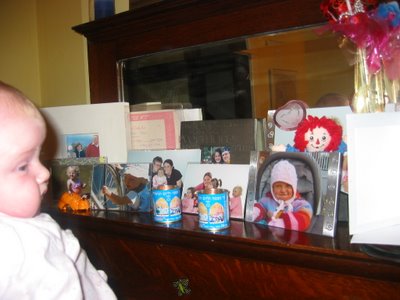
Traditionally Jews light candles a year after a death but we lit a candle for Sasha along with Bruce last sunday on the night of Yom Kippur. It was hard to first celebrate the new year and then a week later contemplate and atone for sins against other people and against the spiritual. Though I am an athiest Jew (strange as that sounds), seeing the two candles beside Sasha's pictures and then on the kitchen table was a gut kick when I had one of those discombobulated moments of disbelief about an event that recently happened and of which there can be no doubt. A moment when the eyes glaze over and the reflection is non rational, just a wave of emotion.
In June I was exhausted, sad and almost relieved for Sasha. During the funeral and meeting of people for the shiva week I felt a little disassociated. There wasn't time to grieve before Mia arrived. There were many times of intense sadness and awareness, such as at her funeral, but the finality for me of Sasha's death seemed to flare more with the flickering candle burning through the night and through the entire following day and into the part of the next night.


We have finally had a chance to meet with some of Sasha's care givers to whom we turned for advice about Sasha's fund.
In September I met with the paliative care nurses and doctors who helped bring Sasha home and was appreciative of their support of my interest in creating a place to remember the HSC kids who have died and any help we can offer in expanding parents choices as they evaluate surgical options. I was very happy to hear of plans for a palliative care library and website portal where knowledge about choices and resources in the hospital or out at the home can be further explored.
Then we visited Sasha's cardiologist, Dr. Jennifer Russell, as a family with Mia. First we stopped by 4D to show off Mia and enjoy a few moments with the wonderful nurses and OTs.
The meeting with Dr Russell was long awaited. We were lucky that by complete chance Sasha was paired with a doctor who can turn from a lazer like dedication to cardiac research and care to an open and empathetic review of any process or decision throughout Sasha's life or experience at Sick Kids and that she has ample capacity for our awkward jokes. She gave us direction and suggestions for further thought about the projects we wish to work on.
The visit was immensely gratifying. And then, as always, followed by intense sadness. Sasha was sicker than we knew as she struggled to grow and develop and handle her medical supports and interventions and then fight back after post surgical bleeding and liver failure. Our little girl experienced a lot and her care was more challenging than expected. So we have a growing list of ideas and little projects that we wish to know think over and fund raise for. More on that later.
The next day we got a supportive email from the OT who helped Sasha walk. "When I think back to how much she accomplished in terms of motor milestones, not to mention her lovely spirit and social skills, I realize now how truly amazing her achievements were. Knowing now, how "invisibly" sick she must have been, her accomplishments were utterly remarkable! I will always feel blessed for having known Sasha."
Pam was asked at our local children's store on St Clair, Playful Minds, how she was doing and if she minded talking about Sasha. What a great question! We love to talk about Sasha. Sure it is sad sometimes and perhaps some parents dont want to talk about a deceased child, so it is good to ask. We do. For those who know us, we are very happy that you remember with us, when you wish to.
For all the dedicated OTs and PTs, here is Sasha's crab crawl, her wanting to always do a couple things at once, and her fiesty determination to go where she wanted:
In June I was exhausted, sad and almost relieved for Sasha. During the funeral and meeting of people for the shiva week I felt a little disassociated. There wasn't time to grieve before Mia arrived. There were many times of intense sadness and awareness, such as at her funeral, but the finality for me of Sasha's death seemed to flare more with the flickering candle burning through the night and through the entire following day and into the part of the next night.



We have finally had a chance to meet with some of Sasha's care givers to whom we turned for advice about Sasha's fund.
In September I met with the paliative care nurses and doctors who helped bring Sasha home and was appreciative of their support of my interest in creating a place to remember the HSC kids who have died and any help we can offer in expanding parents choices as they evaluate surgical options. I was very happy to hear of plans for a palliative care library and website portal where knowledge about choices and resources in the hospital or out at the home can be further explored.
Then we visited Sasha's cardiologist, Dr. Jennifer Russell, as a family with Mia. First we stopped by 4D to show off Mia and enjoy a few moments with the wonderful nurses and OTs.
The meeting with Dr Russell was long awaited. We were lucky that by complete chance Sasha was paired with a doctor who can turn from a lazer like dedication to cardiac research and care to an open and empathetic review of any process or decision throughout Sasha's life or experience at Sick Kids and that she has ample capacity for our awkward jokes. She gave us direction and suggestions for further thought about the projects we wish to work on.
The visit was immensely gratifying. And then, as always, followed by intense sadness. Sasha was sicker than we knew as she struggled to grow and develop and handle her medical supports and interventions and then fight back after post surgical bleeding and liver failure. Our little girl experienced a lot and her care was more challenging than expected. So we have a growing list of ideas and little projects that we wish to know think over and fund raise for. More on that later.
The next day we got a supportive email from the OT who helped Sasha walk. "When I think back to how much she accomplished in terms of motor milestones, not to mention her lovely spirit and social skills, I realize now how truly amazing her achievements were. Knowing now, how "invisibly" sick she must have been, her accomplishments were utterly remarkable! I will always feel blessed for having known Sasha."
Pam was asked at our local children's store on St Clair, Playful Minds, how she was doing and if she minded talking about Sasha. What a great question! We love to talk about Sasha. Sure it is sad sometimes and perhaps some parents dont want to talk about a deceased child, so it is good to ask. We do. For those who know us, we are very happy that you remember with us, when you wish to.
For all the dedicated OTs and PTs, here is Sasha's crab crawl, her wanting to always do a couple things at once, and her fiesty determination to go where she wanted:
Subscribe to:
Posts (Atom)